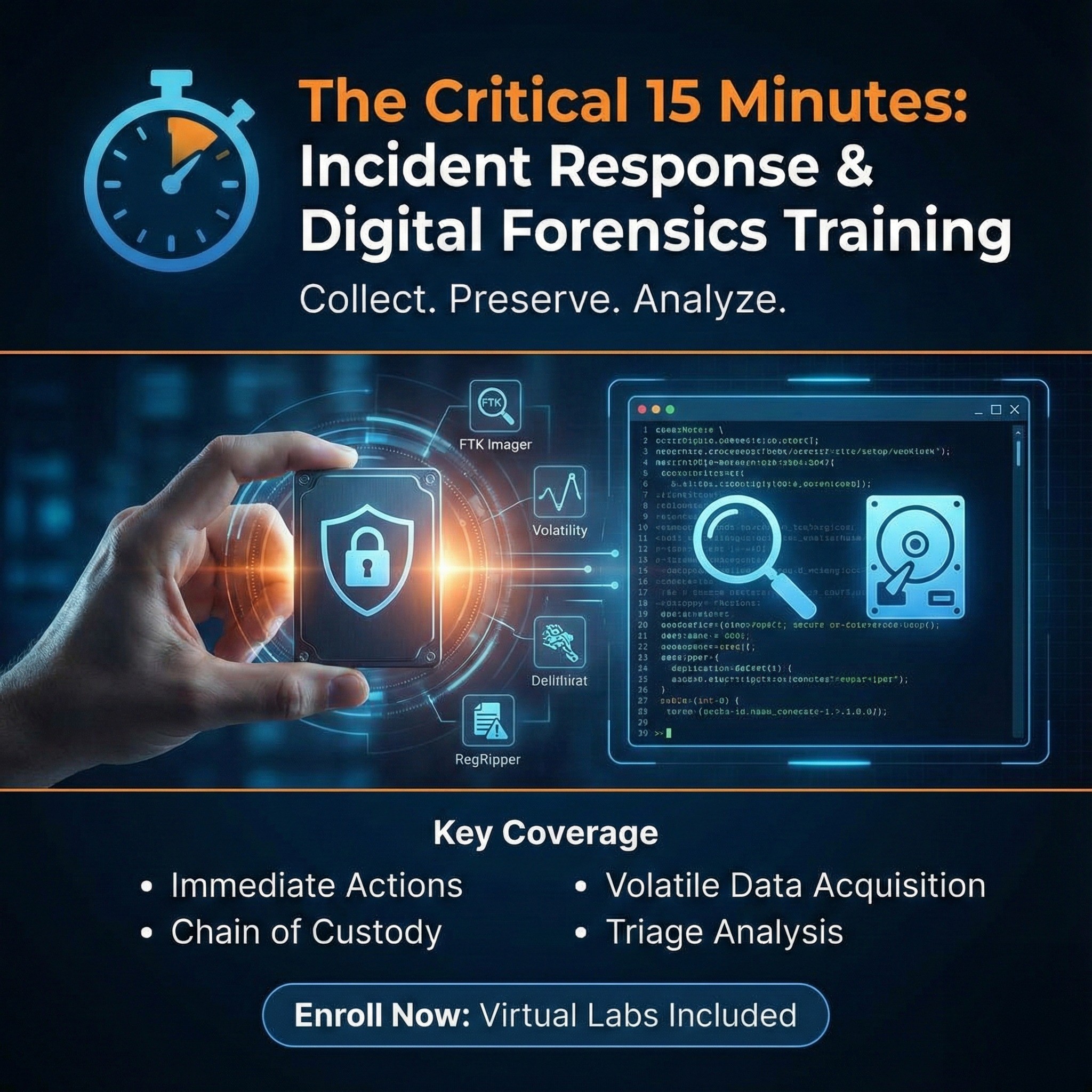
First Responder: Digital Evidence Collection & Triage
The most critical moment in a cyberattack isn't when the forensic experts arrive; it's the moment the attack is discovered. This course teaches first responders (SysAdmins, IT Staff) how to preserve the crime scene using modern forensic tools without destroying the evidence required to prosecute the attacker.
Who Should Attend?
Help Desk / SysAdmins
The first people notified of "weird computer behavior." They need to know what NOT to touch.
SOC Analysts
Tier 1 and 2 analysts needing to grab artifacts (RAM, PCAP) for Tier 3 escalation.
Security Officers
Physical security staff who seize hardware (laptops/phones) during insider threat events.
The "Golden Hour" of Volatility
Why speed matters: As soon as you pull the plug, you lose the most valuable evidence.
- Running Processes (Malware)
- Network Connections (C2 IPs)
- Decryption Keys in RAM
- Clipboard Contents
- Files on Hard Drive
- Registry Hives
- Event Logs
- Prefetch Files
Modern Forensic Lab Tools
Note: These lists are not all-inclusive; the goal is to provide multiple methods to answer any investigative question.
Enterprise EDR Training Add-ons
Customize your private session with vendor-specific training. *Additional fees apply.
Course Syllabus
The Critical 15 Minutes
Immediate actions to take (and NOT take) when a breach is suspected. Securing the physical area. Disconnecting networks without killing power.
Volatile Acquisition (Live Response)
Using Velociraptor for rapid fleet-wide collection. Capturing RAM with Volatility/LiMe/DumpIt before power-off to save encryption keys and C2 connections.
Dead Box Imaging
Safely shutting down the system. Using hardware write-blockers and FTK Imager to create a verified forensic clone (E01) without altering evidence.
Triage & Chain of Custody
Rapid analysis of Prefetch, Event Logs, and Registry Hives using Autopsy and EZ Tools to confirm the attack vector. Proper legal documentation and hashing.